WHEN YOU'RE CHOOSING YOUR PATH
14. On Crafting an Optimal Life
"The two most powerful warriors are patience and time." —Leo Tolstoy
Dear Kids,
Before we get into the small daily choices that build a life — the next few letters are all about those — I want to start with the question of timeline. Because a choice only makes sense once you know how long you're really playing for. And the timeline most people optimize for is wildly, almost comically, shorter than the one they're actually going to live.
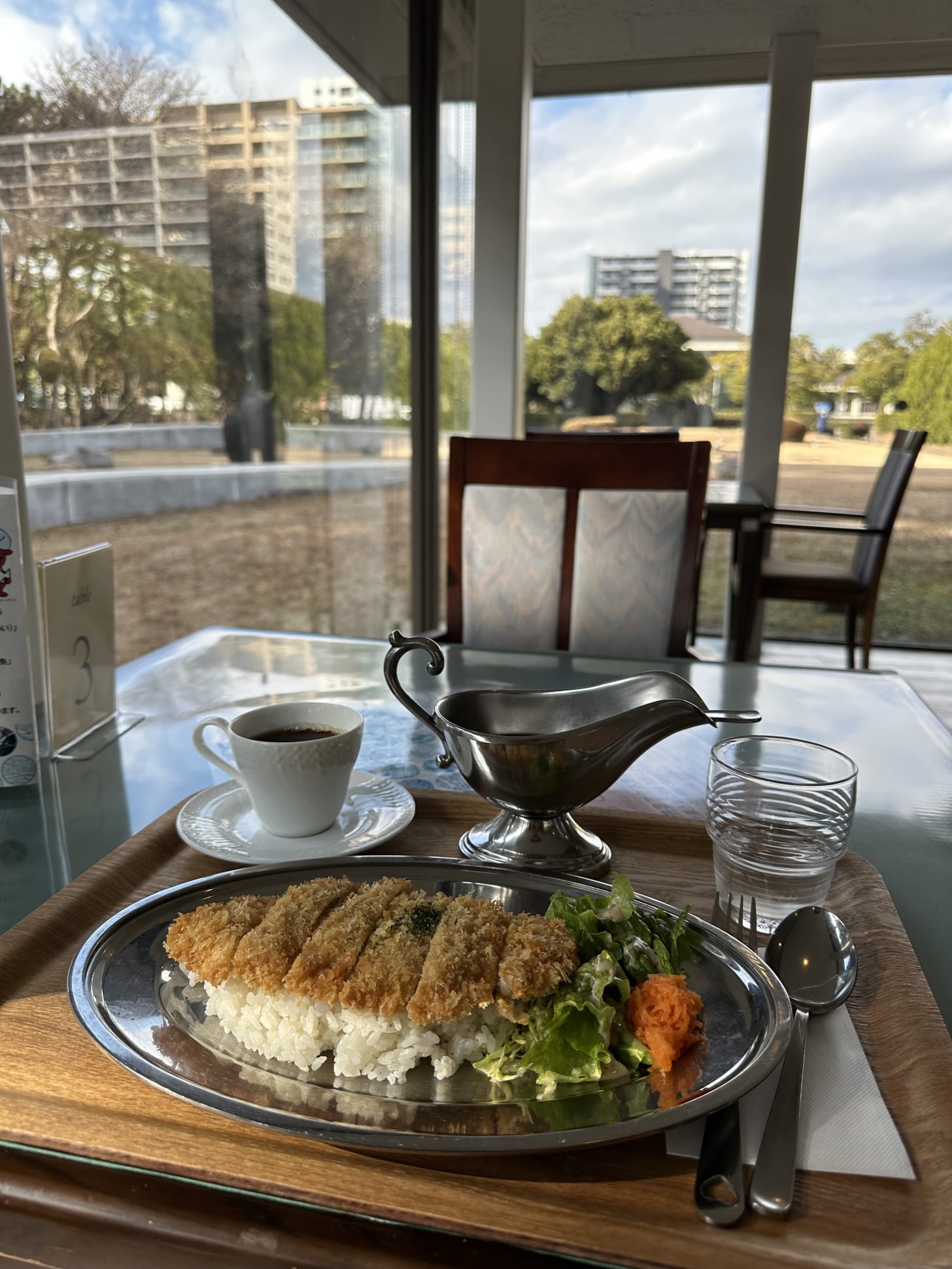
This one came to me on a quiet afternoon abroad. I was in Japan with a few days to burn, and I'd wandered into an art museum in Chiba — somewhere outside Tokyo, in a slow corner of the country I'd never been to. I sat in the café attached to it, picking at lunch and absorbing the atmosphere. It was a beautiful space. Sunlight coming through tall windows. The kind of place that makes you feel like a slightly better person for being inside it.
But after a while I noticed something strange.
Every single other person in the room was, without fail, in their sixties or seventies or eighties. Not most. All. It was like the demographic dial of the entire building had been turned forty years past where I was. And as I sat staring at my noodles, a thought hit me like a brick: what am I doing here?
I don't mean here in the museum. I'd walked in willingly. I mean here, existentially. Why was I, in my late twenties, sitting in this serene bubble of retirement-grade calm, surrounded by people whose hardest decisions were behind them — instead of in a place teeming with the vibrancy and chaos of being young? They say if you're old, you should surround yourself with young people to feel young. Yet there I was, a younger person inadvertently doing the opposite — sitting in a quiet room with people who'd already lived most of their lives.
And as I sat with that, my thoughts took a sharper turn. What would I look like at their age? What was I optimizing for in life — and over what timeline?
The default timeline is too short
Most of us are conditioned, almost without noticing, to think in short horizons. The next year. The next five. Maybe, if we're ambitious about it, the next ten. Our goals cluster around tangible, near-term targets: the next job, the next salary tier, the next milestone on the resume. Society rewards us for it. Companies pay quarterly. Reviews happen annually. The pressure points are all set to the rhythm of a year.
But ask yourself, kids — is that the right rhythm? Most of the structures that push you toward short-horizon thinking weren't designed for you. They were designed for the institution holding the stopwatch.
Imagine, instead, planning your life across the next eighty years. Or, if you're in a position to think generationally — beyond your own lifetime entirely. Watch what happens to the math. Decisions that looked urgent at the one-year horizon become trivial. Decisions that felt indulgent at the one-year horizon — taking the strange trip, learning the language, betting on the relationship that doesn't pay off for a decade — start to look obvious. The whole calculation flips.
David Brooks's The Road to Character gave me the cleanest vocabulary I've found for this lens. I came back to it on an Acela ride between New York and Boston a few years ago, in the long quiet stretch through Connecticut where the laptop dies and there's nothing to do but read — expecting another piece of corporate self-improvement. The line that stopped me in the middle of a sentence was his split between résumé virtues and eulogy virtues. Résumé virtues are the ones you optimize for on a one-year timeline: title, salary, accolades, the things that get listed in a bio. Eulogy virtues are the ones people will actually say about you at your funeral: kindness, courage, the way you showed up for people who couldn't repay you. Brooks's point isn't that résumé virtues don't matter. It's that we spend eighty percent of our young adulthood optimizing one column and roughly none of it building the other — and at the end of the line, only one of those columns is read aloud in a room of people who loved you. The book reframed optimal for me. The optimal life isn't the one that maximizes a résumé. It's the one where both columns are filled out by the time you're done writing them.
What the eighty-year frame reveals
When you start thinking in decades instead of quarters, some things become quietly, sharply clear.
Can you work and earn money when you're 65? Almost certainly yes. Many of the most interesting careers I've watched start in someone's fifties.
Can you start a business in your 60s or 70s? Absolutely. Colonel Sanders franchised KFC at 65. Most successful founders are middle-aged, not 22.
Can you backpack through the jungle, get sketchily drunk with strangers in a remote Thai bar, sleep on a bench in a country whose alphabet you can't read, fall in love with a stranger you'll never see again, experiment with the substances you've heard about but never tried? Probably not.
These experiences aren't frivolous, kids. They have an expiration date. Not because anyone enforces it — but because of the physical and emotional bandwidth you'll have at 65 to do them, the relationships you'll have built by then that you don't want to interrupt, the kids you'll be responsible for, the slowly shrinking appetite for the unknown that comes with age and stability. The window for that kind of living closes, and it never reopens.
The strange irony, the one I sat with at that museum, is that those experiences are often the ones that compound the most. Not in money — in you. They become the stories you'll tell at 70. The memories that come back unbidden in the middle of a Tuesday meeting. The slightly weathered version of yourself that those experiences leave behind. They're not luxuries you indulge in despite a long-term plan. They're often the most long-term decision you can make in your twenties.
Balancing the wild and the compounding
I don't want you to take this as permission to set your life on fire in pursuit of experiences.
The power of compounding is real. Compounding works on money, yes — but it also works on skills, on relationships, on health, on reputation. The five years you put into deeply mastering something, the friend you've kept for fifteen years, the body you've kept in motion since you were 20 — those compound too, and they pay back the rest of your life in ways the wild years can't.
The right answer isn't go wild or grind young. It's know which of your assets has a closing window, and use those windows now.
Your body's capacity for hard physical adventure — closing window. Use it now.
Your tolerance for living rough, sleeping in weird places, eating whatever's cheap, moving across the world on impulse — closing window. Use it now.
Your time without major dependents — closing window. Use it now.
Your capacity to build skills, build wealth, build relationships that compound over decades — open the whole time. Keep going.
The trick of an optimal life is to use the windows that are closing for the things that require youth, and to use the steady years for the things that reward patience.
Oliver Burkeman's Four Thousand Weeks gave the same insight a different and brutal form. I read it the first winter I was in Beijing, in a coffee shop near the Schwarzman dorm, and underlined the title math on roughly the third page. If you live to eighty, you get about four thousand weeks. That's it. Not four thousand years. Not forty thousand. Four thousand. Burkeman's argument is that the modern productivity religion — get organized enough and you'll finally do everything you want — is built on a lie. You can't do everything, and the sooner you accept that, the sooner you can choose what you'll do with the few weeks you actually have. The book sounds like it ought to be depressing. It does the opposite. Finitude turns out to be the design constraint that finally lets you choose, because once you accept you can't have all of it, you have to commit to some of it. That's where an actually-optimal life starts.
Travel doesn't have to mean hitting every popular destination or eating at the Michelin-starred restaurants. Those experiences are pleasant but rarely transformative. The trips that actually change you are the bespoke, awkward, slightly uncomfortable ones — losing yourself in a culture you didn't grow up in, connecting with strangers whose lives don't intersect yours in any other way, sitting with the disorientation of the unknown until something inside you reshapes around it.
A film and a postscript
On the flight back from that Japan trip, the airplane entertainment cycled through The Bucket List — the film about two men with terminal illnesses who go off to fulfill their deepest wishes before they die.
What struck me, watching it 30,000 feet over the Pacific, was how few of their items were about career milestones or money. None of them were about resumes. Almost all of them were about moments that made them feel profoundly human — connecting with strangers, stepping into the unknown, leaving the routine for somewhere that mattered.
That movie isn't deep cinema. But the reminder underneath it is. The list of things people most regret not doing, at the end of their lives, is almost never I wish I'd worked more. It's the experiences. The risks. The people they didn't tell. The trips they kept postponing because the timing wasn't right. The wild years they spent being careful.
I'm someone naturally wired to optimize, kids — to plan, to forecast, to maximize. The Japan trip was a useful corrective. Life's richness isn't only in the long-term achievements. A lot of it lives in the serendipitous, unrepeatable, slightly chaotic moments that don't fit into anyone's planning spreadsheet.
I want to think long-term for the rest of my life. I also want to remember that stepping off the beaten path — and doing it now, while the path-stepping is cheap — is just as long-term a decision as anything I'll put in a 401(k).
Where I'd push back on this
A version of this advice — usually delivered by a guy on Instagram in front of a rented yacht — gets used to justify a kind of permanent vacation lifestyle. Travel forever. Don't take any boring job. Live your dreams. I want you to be careful with that.
The same impermanence argument cuts both ways. Yes, the window for the wild years is closing. Also, the window for building the foundation that will let you live well at 50, 60, 70 is also closing, every day, and it doesn't reopen either. If you spend your entire twenties optimizing for the closing window and ignoring the compounding one, you'll wake up at 35 having had a beautiful run of experiences and almost nothing built underneath.
The honest math is harder. You have to do both. You have to budget enough youth for the wild years that the regret never gets you — and enough steady years for the compounding to actually start working. Most people get this wrong in one direction or the other. The lucky ones, I think, are the ones who get it wrong in both directions at slightly different ages and somehow come out balanced.
A question to carry
So here's what I'd want you to ask yourself, kids, at every major junction in your twenties and thirties.
What does this decision look like if I'm optimizing for the next year? And what does it look like if I'm optimizing for the next sixty?
The two answers should sometimes disagree. When they do, the long-horizon answer wins more often than the short-horizon one — except when the thing on the table is something that won't exist in the long-horizon version. A trip with a friend whose life is about to get harder. A move while you don't have a mortgage. A conversation with a grandparent who isn't going to be here forever.
Compounding wins almost always. Closing windows beat compounding when they're actually closing.
You'll know you're getting this right when, decades from now, you can look back at twenty-eight-year-old you and feel grateful for both what they built and what they didn't postpone.
I'm still figuring this out, kids. I'm still the guy who almost ate lunch alone in a museum in Chiba surrounded by retirees because I was too "busy" to do anything else. The corrective takes practice.
But the question is the right one to ask. What am I optimizing for, and over what timeline? Carry it with you. It's the question underneath every letter that follows.
Love,
Dad
P.S. — Here's the photo I took, looking out from that café after the thought hit me. I keep it on my phone as a small reminder.